Selected work
What we've
shipped.
Live projects, real outcomes, and operational work shaped from Broken Arrow, Oklahoma with client reach as far as Sacramento, California.
North Styles
Built from scratch to replace the old GlossGenius site with a custom standalone brand site. Added dedicated About and Contact flows, stronger local SEO / GEO / AEO foundations, trust-building content, and a cleaner path from discovery to booking.
The original web presence lived on a limited booking-platform site, which constrained the brand, reduced flexibility, and left little room for stronger local search visibility or richer trust-building content.
- Built a custom standalone site from scratch to replace the older GlossGenius presence.
- Added clearer About and Contact flows, stronger business context, and cleaner content structure.
- Improved local SEO / GEO / AEO foundations with more answer-ready and machine-readable signals.
North Styles now has a site it actually owns: stronger branding, more flexibility, and a much better foundation for discovery, trust, and booking.
NorCal Sauce Worx
Built a co-packing brand site with a quote wizard, stronger service positioning, and structured SEO/GEO foundations that support a clearer path from discovery to inquiry.
The site needed to explain a specialized co-packing offer clearly enough for potential clients to understand the process, self-qualify, and request a quote without a lot of back-and-forth.
- Built the site in Angular with a quote flow that helps turn a complex service conversation into a cleaner intake experience.
- Added FAQPage, HowTo, and Service schema coverage so search engines and answer engines can extract the right service context.
- Structured the content around co-packing questions, process clarity, and inquiry readiness instead of generic brochure copy.
The finished site gives NorCal Sauce Worx a stronger service narrative, cleaner lead path, and a more credible search-ready presence for a niche offer.
Prescribed Burn Sauces
Built an e-commerce brand site with a custom WebGL hero, strong product schema coverage, and analytics foundations that support both brand presentation and richer search visibility.
The site needed to feel distinct as a brand while still handling the practical side of search visibility, product understanding, and performance-conscious frontend work.
- Built a more distinctive frontend experience with WebGL and Three.js instead of relying on a generic storefront feel.
- Added product schema, FAQ content, GA4, and Search Console setup so the site is easier for search systems to understand and track.
- Balanced branding, performance, and structured product information so the site can support both discovery and shopping behavior.
Prescribed Burn Sauces now has a stronger visual identity and a much better technical foundation for product visibility, tracking, and rich-result readiness.
Tulsa HVAC Lead Prototype
Built a working local-service prototype that shows how an HVAC site can turn search traffic into clearer estimate requests with stronger service framing, local proof, and a cleaner quote path.
Most local-service sites do not lose the lead because the traffic is bad. They lose it because the service fit is vague, the trust signals are scattered, and the quote request path adds friction too early.
- Built a real prototype page around HVAC repair, replacement, maintenance, and air-quality services instead of stopping at strategy copy.
- Added an interactive service-and-urgency control to show how the page emphasis changes based on what kind of lead is landing.
- Structured the page around one consistent estimate CTA, service-area proof, FAQs, and a shorter intake path.
The prototype now gives Localhouse a concrete local-service case study that is easier to sell than a generic redesign story and much less blocked than another ERP demo.
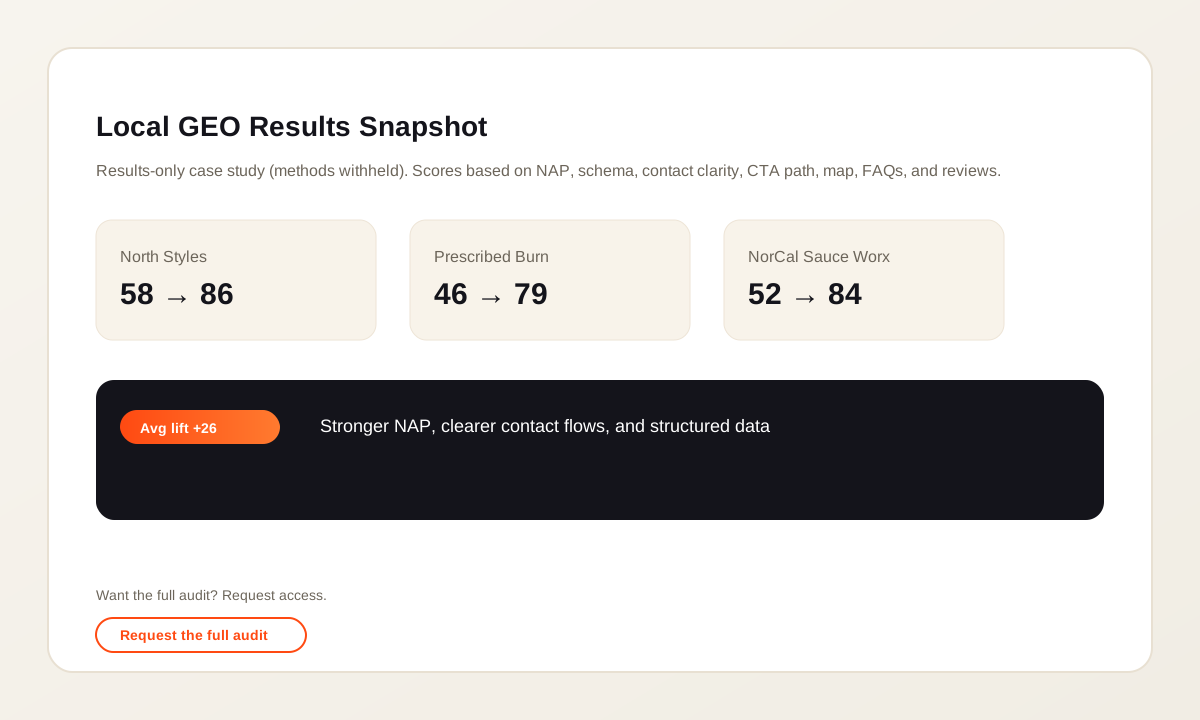
Local GEO Standard
Results-only GEO/SEO case study showing measurable lifts across North Styles, Prescribed Burn Sauces, and NorCal Sauce Worx while keeping the implementation private.
All three sites had different gaps: inconsistent NAP visibility, unclear contact flows, and incomplete structured signals that made local discovery less reliable.
- Scored each site against a fixed checklist: NAP placement, LocalBusiness schema, contact clarity, CTA path, map/directions, FAQs, and reviews.
- Applied the same scoring rubric before and after targeted fixes.
- Shared results only, withholding templates and implementation details.
The public case study shows the outcome and score lift, plus why each site moved (clearer NAP placement, tighter contact flow, and stronger structured signals). Full audits are available by request.

OpsSuite
Unified 7 legacy VBA add-ins into a single C# VSTO Excel ribbon - fully deployed, API-updateable without touching the client machine. Covers capacity planning, master scheduling, exception processing, louver consumption, and purchasing workflows across multiple departments.
The existing Excel tooling was fragmented across multiple legacy VBA add-ins, which made maintenance harder, slowed updates, and spread operational workflows across too many disconnected surfaces.
- Rebuilt the tooling as a single C# VSTO ribbon application that consolidated seven separate add-ins into one deployable system.
- Connected the add-in to APIs and SQL-backed business logic so updates could be delivered centrally without touching each client machine.
- Covered real operational workflows including capacity planning, master scheduling, exception processing, louver consumption, and purchasing support.
OpsSuite turned scattered spreadsheet tooling into one maintainable production application, giving operations teams a cleaner workflow and making ongoing updates dramatically easier to manage.
Generative Workflow Dashboard
Built a generative, role-aware dashboard that turns ERP workflows into a readable operational surface. The UI adapts to workflow state and highlights what matters now instead of forcing users through menu trees.
Operations teams were stuck interpreting transactional ERP screens that were not designed for fast decision-making. That led to slower response times, constant context switching, and missed bottlenecks.
- Designed a workflow-first UI that reorders and prioritizes tasks based on live operational state.
- Created a generative layout that adjusts to different roles and work queues without rebuilding the screen.
- Focused the surface on exceptions, bottlenecks, and next actions instead of raw ERP tables.
The dashboard reduced interpretation time and made operational bottlenecks visible without hunting across ERP modules.
In development
Built but
not yet shipped.
Local Service Contact-Path Rebuild
Next case-study build: a local-service homepage, focused service page, and quote flow designed to show how clearer service framing, stronger trust signals, and one consistent CTA can turn local search traffic into inquiries.
SyteLine Mobile
Using Infor SyteLine as an end user made one problem obvious: the system contained critical operational data, but access to it was still tied too heavily to the desktop. For supply chain leads, inventory managers, shippers, and team leads, that meant slower decisions, more handoffs, and too much time spent chasing routine answers. SyteLine Mobile was designed to fix that - a purpose-built mobile interface that surfaces real-time production, BOM, inventory, and shipment data for the people responsible for keeping work moving.